Sunday, January 31, 2010

A Giraffe and a Half


This children's book is written and illustrated by one of my favorite children's author - Shel Silverstein. This story is about a little boy who stretches a giraffe's neck to make a giraffe and a half. After the giraffe stretches, the giraffe proceeds to get himself into all sorts of trouble as all different things and creatures get stuck on him. All of these things keep collecting on this giraffe until he has so much on him - for example, a rat in a hat on his head, wearing a suit, a rose glued to his nose, a bee on his knee, a shoe stuck with glue, and a chair on his hair, etc. The story ends with the giraffe ridding himself of all of these crazy things until finally he shrinks back to his normal size and we're left with a giraffe.

This story would likely be enjoyable to many kids. It is hilarious as the giraffe puts himself into weirder and weirder situations and everything he steps in or puts on rhymes. The book is read with sequence as each thing he puts on continues to be read on the following pages with one more new thing added. Then eventually all of the things are dropping away until we're back with just a giraffe, as there was on the very first page. This story would be helpful for kids learning to rhyme and is entertaining due to the humorous writing and the hilarious illustrations.

As always, Shel Silverstein's illustrations are simple and contain no color. They have such a unique style that they always work for Silverstein's stories. Color would be fun, but I believe it is not necessary. The story is read with a great rhythm and would be very fun to read to kids!

Nubs - The True Story of a Mutt, a Marine & a Miracle


This book is a true story (with real photos from the events) written and collaborated by Major Brian Dennis, Kirby Larson and Mary Nethery. This story has become well-known world wide. It was featured on various news channels and was written about in an article in People Magazine.

This story is about Nubs, an Iraqi dog of War, who forms a special bond with an American Marine - Major Brian Dennis. The two carry on a friendship and become very attached to one another - Nubs follows Brian around and waits for him when he goes away. Brian cares for the dog by giving him food, shelter and even medical attention. However, one day duty calls and Brian is forced to relocate 70 miles away and he's not allowed to bring Nubs with him. But then Nubs does the unthinkable - he follows Brian's humvee on it's trek across the desert without food or water! Brian is astonished and knows that Nubs is a very special dog so he decides, after a long process of paperwork and other precautions, to send Nubs to America to wait for him and be his dog when he returns from Iraq. This story of unlikely friendship and love is a heart-warming story that has touched many hearts.

This book is very colorful and the pictures capture each moment in the story. It is engaging to look at and if children like dogs, they will likely enjoy this story. Additionally, any child who has a father, brother or other family or friend fighting right now overseas will likely find this story interesting and memorable. I also think this story will appeal to both boys and girls because of it's content, the pictures and it's focus on a dog.

I think the writing was as kid friendly as the story could be. There were a lot details about life as a soldier and with paperwork to get the dog back safely that could have bored children, but I think that information was reduced substantially in a way that was understandable for young kids.

As an adult, this story fascinates me. I would be very interested to find out if kids like this story as well or if some of the amazing aspects of it go over their heads. Would be a great book to try out with kids of all ages!

The Horrible Spookhouse

This book was written by Kicki Stridh and was illustrated by Eva Eriksson. This story is about a little girl who gets lost in the woods and who cannot find her mother and father. As night nears, the little girl knows she must find somewhere to sleep. She's also terribly hungry. She approaches a terrible spookhouse in the woods filled with ghosts, goblins, witches, monsters and lions! But the little girl is not afraid. She's not afraid of the witches or their brew, of the lion's terrible roar, of the monster grabbing her, of the witches in her bedroom or even of a room full or scary creatures and goblins! All of the inhabitants of the spookhouse are puzzled and confused because the little girl is not scared by them. They let her leave in the morning and she finally finds her mother and father again and she is always talked about in the spookhouse as the little girl who could never be scared.

I had never read this story before so I had no preconceived judgments ahead of time. I liked the story because it provided a lot of suspense. If I had read this book aloud to students I could have come up with a lot of interactive questions that would engage students and get them thinking. There were many times I could've asked what they think was going to happen next or many times I could have asked them what they saw on the page or why the little girl was acting the way she did and whether they would've acted the same way or not. It's a positive thing to get kids talking and questioning while reading a story to keep them on their toys and excited to get to the next page.

The story was very predictable, but it may not be for a small child. Additionally, the illustrations were creative and very different, but not my favorite style of illustrations - they didn't really catch my eye as some illustrations in other books have done. The writing was also a bit long on certain pages when there wasn't much to look at illustration-wise. This would be problematic for young children, but probably okay for older children.

All in all, it was a nice story that would be very interactive if read to children and that makes it a successful book, in my opinion.


The Giving Tree


This children's book is written and illustrated by Shel Silverstein. This story is about a tree who loved a little boy very much. Every day the little boy would come to her to visit - he would climb her trunk, play with her leaves, or sit under her shade. The tree was happy to give herself to the little boy - she let him eat her apples and swing from her branches. But as the boy grew older, he began to visit the tree less often. When the older boy did visit she continued to give herself to him - first her apples for him to sell, then her branches for him to build a house, and her trunk for him to build a boat. Then the tree was no longer happy. But the boy came back when he was an old man and the tree thought she had nothing to give him but he just wanted a quiet place to sit down and the tree offered him her stump. The old man sat down and the tree was happy again.

This story was one of my favorites when I was young. It's written so simply and the illustrations have no color or great detail yet they portray the emotions that are felt due to their simplicity. I best know Shel Silverstein's witty comedic poetry so this story shows a different side of Silverstein's capabilities as a writer. As it did when I was a kid, this story oozes with sadness and despair, yet the trees unselfish ways provide a hopeful aspect to the story that makes the book endearing to its readers. This story is a story of true friendship and love in the most selfless way and that is a great message to get across to children.

I think this story may bring up some questions among younger kids, like, "But why did the man cut the tree down?" and "Why did the man take everything from the tree?" but I think parents and teachers could easily explain the significance of these events in a way which would make sense to small children. Although the illustrations lack color and detail, I don't remember them boring me as a child - I was always entranced by the simplicity of his drawings so I think other children likely were too.

This is a story that will remain a favorite of mine forever and I hope to read it to my students and my own children in the future.

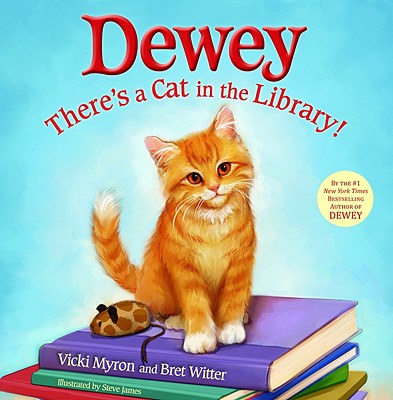
Dewey - There's a Cat in the Library!


This children's book was written by Vicki Myron and Bret Witter and was illustrated by Steve James. This book is about a stray kitten who is found at the library by the local librarian - Vicki. Vicki takes the kitten in and cares for it. The kitten becomes the library cat and it struggles with being around so many kids who don't always hold or pet him the right way. After a series of incidents, the kitten decides to become the best library cat he can be - and he even learns to get along with all of the kids!

My favorite aspect of the book is the illustrations. They are all paintings, but they contain so many details and are beautifully done. Light hits the painting in all of the right spots creating more realistic images. The painting really pays attention to detail and captures the emotions of the characters on their faces.

Additionally, the story is based off of a true story and the setting is in Iowa. This makes the story more relatable to kids and even for adults, too! The writing is very simplistic - perfect for children as young as three, but would likely also capture the attention of kids as old as nine. The writing is humorous and engaging. Most children love animals and it's always fascinating to read a story from an animals perspective - especially an animal as curious and silly as Dewey the library cat!

I think most children would enjoy this book because of how relatable it is, how beautiful and detailed the illustrations are and how funny the story is.

Monday, January 25, 2010

Charlotte's Web


I chose to read "Charlotte's Web" by E.B. White because both the book and the cartoon version of the movie were a favorite story of mine. I have always had a passion for animals (and have always believed they communicate when we're not around!) and I related to Fern's character and her desire to save the runt pig, Wilbur, from being killed. Additionally, this book was given to me by a second grade teacher whose room I was in for practicum. She gave me the book to read to my future students because she said it was her favorite. I certainly plan on reading it to my students.

What I like about the book is the engaging way it is written. Even at my age, I became entranced with the story and couldn't put it down. I knew the story already, but hadn't read it in so many years that it was fun to reread it once again. I like how the story touches on sensitive realistic things, such as death and growing up. I think it's important for kids to not be too censored from such issues. However, I also had some issues with those topics, probably because they are such touchy issues. [Spoiler Alert!] I thought that Charlotte's death may be too difficult for very young children. I think I'd have to only read this story to children who are in 2nd grade or older. I also was a little upset by Fern's behavior when she started to like Henry Fussy. First of all, I thought she was eight and she's a little young to be that boy-crazy! And secondly, she wasn't even around for Wilbur's winning at the state fair. I thought she should've pulled through there as Wilbur was, after all, her pig who she raised from birth.

Other than those 2 issues, I loved the story and it was just as engaging as it was when I was a child. I look forward to reading it in my own classroom!

Thursday, January 21, 2010

Arthur's Baby


"Arthur's Baby" is just one of many of the Arthur book series written by Marc Brown. In this story Arthur is adjusting to welcoming a new baby sister into his family. Arthur struggles with this new addition - how it will change his life and how to care for his newborn baby sister.
Arthur books are popular with elementary-aged students because Arthur is a relatable character dealing with similar issues that elementary students are dealing with. Arthur faces challenges with getting along with friends and family, getting good grades, dealing with new school years, chores, rules, etc. Arthur is an endearing character that appeals to many.
Additionally, the Arthur series is written simply yet in an engaging format that keeps kids interested. There is always a good message that comes across in each Arthur book that helps kids differentiate between right and wrong. Arthur books are great books to read in the classroom for lower to middle elementary ages.

The Very Hungry Caterpillar

"The Very Hungry Caterpillar" is a popular children's book written by Eric Carle. This book tells the story of metamorphosis - a caterpillar becoming a butterfly - in a way which is creative, artistic and captivating.
This book is both educational and entertaining for young readers. The book leads readers through the basics of metamorphosis while providing creative illustrations and cut-outs on the various foods the caterpillar munches through! Some pages are one-fourth the size of the other pages, which allows for fun, out-of-the-ordinary reading.
I always liked this book as a kid because of all of the pictures of the fun, various foods with the bites out of them were always so eye-catching. I love art and have always enjoyed good illustrations. Additionally, the process of metamorphosis is a fascinating process that interests both children and adults.
Students will enjoy this book because of it's simple wording and plot, it's beautiful illustrations and for it's creativity.

Curious George

For Reading and Responding to Children's Literature, I choose another one of my childhood favorites, "Curious George" by H.A. Rey. "Curious George" tells the story of a naughty, little monkey who is captured in Africa and brought back to America to live in a zoo. George the monkey is so curious that he gets himself into all sorts of trouble that the man with the big yellow hat has to get him out of!
This book is great for young kids as it contains colorful pictures, has a simple story and is really funny. George is a great main character - one who children find captivating and hilarious due to his curious nature and care-free spirit. This book prompted further books about George and his crazy adventures and it was even made into a recent motion picture. "Curious George" has a clear beginning, middle and end, which allows kids to begin to understand a story format which they can use for creative writing purposes.
The story teaches children about the ways in which being too curious can get someone into a lot of trouble or put them in a dangerous situation. The story also contains a lot of sounds and exclamations written with capital letters. There is some easy counting from one to seven, as well.
All-in-all, this book is a classic that is sure to captivate young readers and teach them a few simple lessons about steering clear of trouble!

Madeline

For Reading and Responding to Children's Literature, I chose the book "Madeline", which is a favorite book of mine from my childhood. The book is written by Ludwig Bemelmans and has received a Caldecott honor book award.
"Madeline" is about girls who live at a catholic school. Little Madeline - who is uniquely different from the other girls - gets sick and needs her appendix to be taken out. The illustrations in this book are simple and creative. The majority of the pictures are only printed in yellow, black and white but sporadically throughout the book there is a two-page spread of full color illustrations.
This book rhymes so it can be read with a smooth rhythm to it. For example, "In two straight lines they broke their bread and brushed their teeth and went to bed." There are only a couple of words per page so this book works well with younger children as a beginner read. The story touches on good and bad people and what it means to be different from all of the others. This book also touches on how it feels to be a child sick in the hospital and what it means to be concerned for a friend who is ill.
"Madeline" is a timeless story, well-known by all and a book that can be read repeatedly still capturing young children's attentions!