Wednesday, April 21, 2010

So Far from the Bamboo Grove


I just came to the realization that I never blogged about this novel, So Far from the Bamboo Grove! This novel was written by Yoko Kawashima Watkins and was one of my favorite books from the semester. Due to my enjoyment of this novel, I am surprised I forgot to blog about it! But, better late than never, I guess.

This novel is the author's true story - her account of her life during World War II. The main character (and author) Yoko is an eleven-year-old Japanese girl living in Northern Korea and faced with the hardships of war. This story follows Yoko, her sister, Ko and her mother as they make their journey to Japan for safety. Yoko's brother and father are away due to work, so the family is separated and desperate to reconnect once again so that their family can be together again. This book mostly covers the treacherous journey their family makes - both the women and their brother - and the plight of their people due to the Korean invasion.

This novel is just one perspective and account of World War II and it features Koreans as enemies, yet also as kind supporters. Some chapters of this book are extremely difficult to read and graphic. It was hard to read about the train journey - specifically the mother whose dead child is tossed from a moving train, only to be followed by the mother committing suicide by jumping off the moving train as well. Additionally, rapes were mentioned, along with extreme suffering. These aspects of the book make it controversial. However, if this book were taught to older children - 5th grade and older - it would be more appropriate and they would be more mature to handle it. Also, this book should not be taught on it's own. It should be taught simultaneously with Year of Impossible Goodbyes to show students both sides and perspectives of the war. Also, this unit should encourage research to check facts and to find other supplementary material to support their position or take on World War II.

I really enjoyed reading this book and would certainly teach it in my classroom!

Sunday, April 18, 2010

End of the Semester Reflection

I think this class has gone very well for me this semester. The blogs have been very fun and I think they will be very useful in the future when I am selecting books for my classroom for read alouds or student selection. This blog will be a useful resource for me with literature selection - it's essentially mini reviews of books and many are organized by genre, which will also be helpful with units.

My favorite book(s) that we read as a class were "So Far From the Bamboo Grove" and "The Giver". I think both books would be terrific to read in fourth and fifth grade classrooms. Both books were engaging, emotionally riveting and many lessons could come from each. With "The Giver", it would be so much fun to teach a lesson on color. Students could select the passages which feature color. The students could use illustrations and poems to display their understanding of the use of color in the novel. Students could also write about their own thoughts on the future of the world. "So Far from the Bamboo Grove" would be a great book to accompany a World War II unit. Comparing this book to the viewpoints in "Year of Impossible Goodbyes" would create a great compare and contrast paper or discussion.

My favorite part of the class was making our glogs. I love art and am a very creative person. Glogs allowed me to showcase my creative abilities in a digital form. I had also never even heard of glogs, so I was able to learn about a new modern technology that I could use from now on. My glog will also be a great visual for the start of an author study unit or poetry unit about Shel Silverstein.

This class has broadened my knowledge of children's literature and has given me insight into many aspects of book usage. My favorite unit was the controversial book study. The practicality of this class will allow me to be able to use many aspects of this class in my classroom in the future.

Monday, April 12, 2010

LOVE THAT DOG


LOVE THAT DOG is written by Sharon Creech, winner of the Newbery medal for Walk Two Moons. This poetry novel is very interesting and a quick read. This story follows a struggling poet, Jack, who is in Miss Stretchberry's class (Room 105). Jack doesn't feel he can write poetry and any poems of his that his teacher wants to share with the rest of the class leads to Jack's refusal to put his name on his work. Jack is not confident about his poetry work. However, the more Jack writes in his journal and the more positive feedback and prodding he receives from his teacher leads to his true capabilities shining through. Jack discovers that poetry isn't all about rhyming and that splitting up his lines in different ways can cause his words to have a different rhythm and sounds very good after all. Jack also reads a lot of poetry and class. His favorite poet is Mr. Walter Dean Myers. Miss Stretchberry convinces (with Jack's help) Mr. Walter Dean Myers to come visit their classroom and talk to the students about poetry. It is Jack's favorite day and he feels proud of his poetry. Many of Jack's poems focus on his yellow dog who was hit by a car and how tough of a time that was for him.

This book was very fun to read. It would be great to read this novel at the start of a poetry unit for 4th, 5th or 6th graders. This book shows students how poetry can really be simple words broken up in many different ways. This book also shows the feelings of a student learning to write poetry and coming out of his shell. Many students will feel the same way as they're learning to write poetry - a genre that is out of their element. I plan on implementing writing journals in my writing workshop, so students could be simultaneously writing in their own notebooks while reading this book.

I like how the book is formatted in a dated diary/notebook style. This makes it more fun to read. I also like the changes Jack makes from the beginning of the book to the end. It's a wonderful transition to witness. I think older elementary and middle school kids will love this book and get a lot out of it!

Thursday, April 8, 2010

Button Up!


Button Up! is a poetry picture book written by Alice Schertle and illustrated by Petra Mathers. This book is all about clothes and how they can have a life of their own. Each item of clothing is paired with an animal and then a poem is written about their pairing. Many of the pages write about growing up and how your clothes change. For example, in Emily's Undies the switch from diapers to big girl undies is discussed. Many young children transitioning into undies, big kid beds, sippy cups, etc. will relate and find themselves interested in the poems.

I would recommend this book to young preschool aged children, but up until age 6 or 7. The poems are longer but relatable for children of these varying ages. I think my favorite poem from the collection would be Emily's Undies.

We're Emily's undies
with laces and bows.
Emily shows us
wherever she goes.
She doesn't wear diapers,
not even to bed.
Now she wears undies
with ruffles instead.

We're Emily's undies,
fit for a Queen,
the prettiest undies
that anyone's seen,
and everyone's seen
our laces and bows
because Emily shows us
wherever she goes.

Each poem is written from the perspective of the clothing, which is an interesting spin on things. Each poem rhymes and has smooth rhythm. The illustrations are sweet, but not overly exciting. They're pretty simple and there is a lot of white space. I think the poems would stand out more if the illustrations were more colorful, bigger, detailed and really popped. That was my one complaint. But this book would be great to read to young preschool aged children and kindergarten or first graders. I enjoyed the poems.

Busy in the Garden


Busy in the Garden poems are written by George Shannon with pictures by Sam Williams. There are 24 poems in all that deal with nature and more specifically, the garden. Each poem is short, simple and very creative. These poems are definitely geared more towards preschoolers or possibly kindergarteners. It might be fun to read these poems to kindergarten students for the start of the spring season or during a gardening or planting unit.

These poems are very creative. They are written stylistically very different from one another. Each poem is in a different format and is read with different rhythms. They also don't all rhyme, although the majority do. In the table of contents you can easily find the poems and determine which is best to read aloud for the purpose of a unit. Each poem is appropriate and educational. Some are silly and mind twisters, while others are more complex. The variation among the poems is awesome and shows kids all of the different ways poetry can be written.

The illustrations are sweet. They are done in watercolor and are very colorful and eye-catching. They're not overly thrilling though and do not contain a ton of detail. They use large brush strokes and thick lines with soft colors. They're pretty paintings, but I don't know if they'll be thrilling for kids to look at. I think they could be modernized a bit. Overall, I would read this book to young children as a way of introducing poetry and a way to introduce a unit on planting/agriculture.

Almost Late to School And More School Poems


This poetry picture book is written by Carol Diggory Shields and is illustrated by Paul Meisel. This book of fun school poems was a blast to read! There are poems about the first days of school, the science fair, what happens when the school is locked up at night, late excuses, detention, etc. The poems all rhyme and stick in your head. They're fun and relatable for school aged children. My favorite poem is: They're Calling Me that Name Again

They're calling me that name again -
It's driving me insane -
In voices shrill, like little drills.
Attacking my poor brain.
In classroom, playground, hall and gym,
From swing and slide and bleacher.
I hear it everywhere I go -
"Teacher! Teacher! Teacher!"

I think this poem is great because I know that students do this all the time. They are constantly asking their teacher questions over and over again, which can give a teacher a headache! This would be the perfect poem to hang up in the room so students know to raise their hands and not call out repeatedly. Many of these poems would be great hung up in the classroom - they're fun, creative and relatable.

The illustration are fun to look at. Sometimes the words are incorporated quite creatively with the illustrations. There's always something different to look at while reading each poem. The illustrations are detailed and they are diverse - kids from all different backgrounds are represented in each picture.

Because I Could Not Stop My Bike and other poems


This poetry picture book is written by Karen Jo Shapiro and is illustrated by Matt Faulkner. Shapiro rewrites famous poems from English and American Literature from poets such as Emily Dickinson, William Shakespeare, Sir John Suckling, Walt Whitman, and Edgar Allen Poe among others. Shapiro's creative spin on the classics is very entertaining. She apologizes to each well-known poet and the original poetry before beginning her silly poems on daily blunders fashioned after the classics.

Shapiro shows a lot of creativity in her writing and each poem can be read with a smooth rhyme and rhythm just like the originals. The illustrations are unique. They creatively express the poem and are vivid and detailed. The poems are supposed to be funny, but I wasn't sure if I found them that hilarious. They seem to focus primarily on day-today issues and dilemmas yet they are not hilarious. I'm not sure if kids would get into them or not. The poems are a little bland, but the idea behind the book is wonderful. My favorite poem from the poetry book is titled Where My Feet Go.

Where my feet go, there goes me.
But one day we did not agree.
I thought we'd go to the library,
But my feet wanted to climb a tree.

"Dear feet," I said, "oh, please be fair."
My feet said they'd be glad to share.
So now we all go EVERYWHERE.

I think this poem is clever and the illustration of a girl hanging by her feet high above the library in a tree reading a book perfectly captures the essence of the poem. All of the poems are appropriate and cute, but they're not very funny/they don't have that WOW factor like a lot of other poetry books for children I have read. However, they're all great for beginner poets and they all feature rhyme and are appropriate for students of all ages. I would keep this book in my classroom.

Monster Goose


Monster Goose is written by Judy Sierra and is illustrated by Jack E. Davis. This children's poetry picture book is very spooky. It takes traditional nursery rhymes (like Humpty Dumpty, Little Miss Muffit, The Itsy Bitsy Spider, etc.) and turns them into haunted nursery rhymes. My favorite ghoulish poem is There was an Old Zombie.

There was an old zombie who lived in a shoe.
She had so many maggots, she didn't
know what to do.
So she soaked them in soapsuds and
painted them green.
She'll be giving them out next Halloween.

This poem based on "There Was an Old Lady who Lived in a Shoe" is very humorous. It's creative and contains the same rhyme and rhythm as the original. Additionally, the illustrations in this book are fabulous. Very detailed and creative. Each picture perfectly captures the elements of the poem. Whatever you read in the poem you can find in the picture. The illustrations are colorful and successfully creepy.

Some of the poems I felt were slightly inappropriate. For example, the poem Little Miss Mummy.

Little Miss Mummy
Lay on her tummy
Smoking a big cigar.
A very large spider
resided inside her.
(She kept all her guts in a jar.)

A cigar isn't something to get all upset about, but I don't see why tobacco use has to be encouraged in any way to children. This book would be great for read-aloud during Halloween week, allowing me to skip certain poems and read a few of my favorites instead. I don't think I'd keep it in my library.

Tuesday, April 6, 2010

Year of Impossible Goodbyes


Year of Impossible Goodbyes is written by Sook Nyui Choi. This book is from the perspective of ten-year-old Sookan - a Korean girl living during World War II. The Japanese Military is invading Korea and Sookan and her younger brother, Inchun, endure the hardships of war. After the Koreans win the war the communist Russian troops take control over North Korea and Sookan and her family must escape to South Korea. With her older brothers in labor camps and her father in Manchuria, Sookan, Inchun and their mother flee the north. The children become separated from their mother and after terrorizing weeks, the children make it successfully to the south without being caught by the Russians. Their mother is held by the Russians and eventually was made to be a servant for a Russian family. She escapes their home and she too makes it to the South and is reunited with her children and husband. Sadly, their Aunt Tiger is killed when she remains home in North Korea.

This novel is based on many true facts from the author's life, which makes it more emotionally pulling. The story was slow to start off, but in the 4th/5th chapter it really took off and I became immersed in the book. The writing was so detailed and descriptive, allowing me to visualize as a reader. I began to truly feel for Sookan and her family as the book went on and I was pulling for their safe entry into the South.

This book would make a fantastic unit paired with So Far from the Bamboo Grove. Both of these book take oppositional viewpoints on World War II from both the Korean perspective and the Japanese perspective. It would be interesting to hear students takes on the oppositional sides and to sympathize for both countries. A war involves more than one country (typically) so it's important to hear both sides. It's also crucial that students understand the torture and despair war can bring to those who are least deserving of it - i.e. women and children.

This book unit would definitely be most appropriate for 5th grade at the youngest through to middle school aged children due to some of the graphic content and material. However, I feel that all of this content is necessary for older students to understand and read about. I would also certainly be open to conversation about any topics students are concerned about. These books would definitely open up conversation in the classroom regarding the devastation of war.

Things that are most in the world


Things that are most in the world is written by Judi Barrett and illustrated by John Nickle. This book carries a common theme of, you guessed it, things that are most in the world. For example, each page bears a silly, out of the ordinary example. "The wiggliest thing in the world is a snake ice-skating." and "The quietest thing in the world is a worm chewing peanut butter". This wacky "most in the world's" are fun and engaging for young children. Additionally, the illustrations are great - very detailed and appealing. They're fun to spend time looking at and make the "mosts" come alive.

What I like most about this book is its ability to be a mini-lesson in the classroom. At the end of the book, there is a blank page that reads: The _________est thing in the world is ____________________________.

It would be fantastic to read this book animatedly to students and then follow up with a worksheet that has the above phrase on it. The kids can then brainstorm about something that is most in the world and write what that would be. I think this would be such a fun assignment for kids to work on - something that gets them writing, but isn't overwhelming.

Obviously, I would certainly use this book in my classroom. It's fun and engaging! It also stems into a wonderful lesson suitable for young children. This book is sure to be a winner in the classroom!

Little Red - A Fizzingly Good Yarn


Little Red is written/retold by Lynn Roberts and is illustrated by her brother, David Roberts. This book takes a slight twist on the traditional fable of Little Red Riding Hood. In this story the main character, Little Red, is a young boy. He travels weekly to his grandmother's house to bring her food and his parent's special ginger ale that comes from their inn they own. Little Red's mother warns him to stay on the path to grandmother's house. However, along the walk, Little Red spots some red apples high up in a tree. He takes off his red jacket in order to climb better to reach the apples. The wolf that has been following him grabs Little Red's jacket and takes off for Little Red's grandmother's house to eat her first. Dressed as Little Red, the very shortsighted grandmother thinks the wolf is her grandson and lets him inside. The wolf swallows the grandmother whole! When Little Red arrives he is worried about his stolen jacket and he looks for his grandmother inside. He finds his grandmother in a dark room and he comments on some of her features that he can make out in the dark. Frightened, he realizes that this "grandmother" is really the wolf! The wolf tries to eat him up for dessert, but Little Red has other plans. He convinces the wolf to try the ginger ale first before eating him. The wolf guzzles down the ale which causes a loud burp. He burps Little Red's grandmother right out! Then Little Red hits the wolf over the head with the ale jug and knocks him out cold. He ties up the wolf. When the wolf awakens, the little boy talks reasonably with him about a trade-off. They come to a compromise and agree that every week Little Red will leave a jug of ginger ale in the woods for the wolf IF the wolf never eats anyone again. The wolf agrees (because the ale is better than humans anyway!) and they both live happily ever after.

This book was very fun to read. I love twisted fairy tales that still contain the positive message for kids. I loved how creative the story was and how the main character in this story is a little boy, rather than a little girl. It's nice for the boys to be represented in fairy tales too! The writing was very clever and engaging. I immediately wanted to know what the twist was when I began reading. I also love, love, love the illustrations. They're very interesting and I've never seen any like them. They have a very spooky vibe to them and it was fun to find little details in each drawing. They are more detailed than they actually appear. I like the overall creepy, scary twist to the story, enhanced mostly by the effective illustrations.

There is some violence in this story, but none that I feel is too inappropriate. Plus, the violence is performed in self-defense so the little boy is not eaten! I think I'd become a little violent as well, if a wolf were going to eat me. There was also the reference to ginger ale a lot. I was assuming this drink was alcoholic, but I didn't know. That could be viewed as inappropriate, but I think it would probably pass over most kids heads anyways. Overall, I loved this remake of Little Red Riding Hood and was very engaged while reading it. Kids would love it!

The Cow That Laid an Egg


The Cow That Laid an Egg is written by Andy Cutbill and is illustrated by Russel Ayto. This book is about a cow (Marjorie) who feels rather ordinary and down in the dumps. She wishes she were as talented and special as the other cows she knows. Her friends, the chickens, devise a secret plan to make her more special than the other cows - they make an egg and paint it like a cow with black splotches and put it under Marjorie! In the morning, Marjorie discovers the egg and is shocked herself! She shrieks and the cows and the farmer are in awe. The farmer's wife calls the local paper to tell them about their special cow who laid an egg. Marjorie becomes famous and visitors continue to come to the farm to see this miraculous cow. But the other cows on the farm don't believe that Marjorie laid an egg. They suspect that the chickens just put the egg under her! Angry, Marjorie swears that the egg came from her and they all wait until one day when it hatches after being kept warm by Marjorie. Out pops a baby chick and the cows laugh and think they're right. However, the baby "chick" looks up and says deeply, "MOOOOOOOOO!" and Marjorie knows the baby is her own.

This book has wonderfully creative illustrations! They were so fun and very unique. The illustrator seemed to use multiple forms of media to put the illustrations together. They were brightly colored and very stylized - could have only been done by this illustrator. The writing was very simple, but it read easily and smoothly and was easy to get into. This book would be for lower to middle elementary school. It could be used in a farm animal unit or science unit. I loved the goofy story, the positive message (everyone is special in their own way!) and the illustrations. I would highly recommend this book to other teachers teaching lower elementary grade levels.

Bandit


Bandit is written by Karen Rostoker-Gruber and is illustrated by Vincent Nguyen. This book is similar to a graphic novel. It contains numerous speech bubbles of what Bandit the cat is thinking or saying. This story follows Bandit, an orange tabby cat, whose owner decides to move. Bandit can't figure out why his house is emptying out and all of his belongings are being taken away by strange men in a van. His owner drives much further than the vet to get to their new house. Only Bandit thinks he must return home! None of his possessions are in this cold, stark new house so he takes off out the door and runs all the way back to his old house. He slips inside the screen door and the new family who has moved in is shocked to find a cat in their home. The woman demands that Bandit leave. He is kicked out and as he's running off his owner drives up and finds him right where she thought he would be. Relieved to be safe, Bandit is taken home to his new house where he finds it unpacked and all of his things where they should be. Comforted, Bandit accepts his new "home".

This book is really fun to read. All of the speech bubbles and it's comic look make it aesthetically pleasing. It also contains a lot of humor - the cat makes for an interesting main character! This book would be great for middle elementary. It would also make for a fun read aloud. It has a great, relatable message about moving and how tough that can be. I'm sure many students will have dealt with moving before so this book is a great way to approach that subject. After reading the book it could be fun to have them share moving stories or how they felt/would feel if they moved to another house, neighborhood, city or even state. I like to read books with kids that open up conversation and this one definitely fills that category. Additionally, I think the illustrations are so great - very modern and unique. They're simple, but appealing. They remind me of a cartoon, which many kids love! I would definitely include this book in my classroom for read-aloud or for my classroom library for the cat lover out there.

Guess Where You're Going, Guess What You'll Do

Guess Where You're Going, Guess What You'll Do is a great beginning to read book written by A.F. Bauman and illustrated by True Kelley. This book is definitely suited for very young children - ages 2 - 5. This book is interactive - you read clues about an activity/the place you'd do this activity and guess what the activity is. The illustrations help you to figure out where you're going and what you'll do, as well. This book takes you on many adventures - and adventures that all little kids will recognize and likely have experienced themselves. You start out sledding, then having a picnic in the park, fishing at a creek, at the beach, going to school, going trick-or-treating and finally going to sleep to dream of what you'll do and where you'll go in the future.

This book would be a great read-aloud because it's so interactive. You could give the students clues and then have them guess before you turn the page and show them the answer. This book would also be great for read-aloud because of the detailed pictures. Students would enjoy spending a lot of time looking at the detailed, vivid pictures. This would also be a good book to have in your library if you teach preschool or Kindergarten because students could definitely get a lot out of it and make educated guesses from the pictures.

My only issue with this book is how dated it looks. It was published in 1989 (the year I was born!) so I guess that was over two decades ago. I just would be slightly hesitant to use it in my classroom because of how old it looks. However, all of the pictures and things to do are things we all still enjoy and take part in, so it could still definitely work.

Monday, March 29, 2010

The Magic School Bus Fights Germs


The Magic School Bus Fights Germs is a Scholastic Level 2 book written by Kate Egan and illustrated by Carolyn Bracken. This series is well-known and loved by children and was originally written by Joanna Cole and illustrated by Bruce Degen. Level 2 books in the scholastic series indicate a focus on longer sentences and stories with words kids need to know and new "big" words they will want to know. This book is all about germs. Wanda, who is in Ms. Frizzle's class, feels ill. Ms. Frizzle sends her to the nurse but she gets all of her students into the magic school bus and it shrinks down to the size of a cough drop and Wanda pops the bus into her mouth. While inside Wanda's throat, Ms. Frizzle teaches the class all about germs, strep throat, white and red blood cells and other things. The students learn alot inside Wanda's body and when they escape out of her mouth while she's sleeping they go back to their classroom and make get-well cards for Wanda and are sure to teach her everything about her illness when she returns.

This book is fantastic because it really teaches students about reading and science. Readers learn all about germs and bacterias and can read this book easily. This book has many summary pages to capture the major science facts and the book is fun - it has tons of speech bubbles with the students and Ms. Frizzle's conversations. The writing is approachable for students and is working on getting kids more used to chapter books. I think this book would be great for second or third graders to get them acquainted to longer reading materials. I purchased this book from the scholastic book orders and plan on keeping it in my classroom library. It would be a great read-aloud during a science unit and it would be great for kids to read during free read.

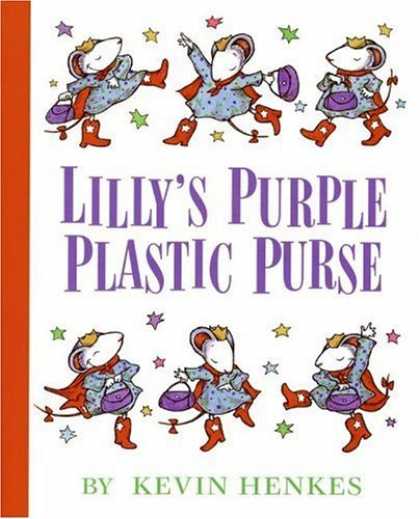
Lilly's Purple Plastic Purse


Lilly's Purple Plastic Purse is written and illustrated by Kevin Henkes. This story is about Lilly and her experience at school with her teacher, Mr. Slinger. Lilly loves her teacher Mr. Slinger and he makes her want to be a teacher. However, one day, Lilly brings her new movie star sunglasses, three quarters, and most importantly, her new purple plastic purse to school. She's so excited about her new stuff and she cannot wait to show Mr. Slinger and her classmates. Everytime she tries to show her new stuff off she is a distraction and Mr. Slinger has to tell her no and remind her to stop distracting the class. He even takes her things to hold on to them until the end of the day. Lilly is so upset that she writes a mean letter to Mr. Slinger and says she does not want to be a teacher anymore. As Lilly is walking home from school she looks into her purse and sees that Mr. Slinger has written her a nice note and put the snack she refused to eat inside. Lilly then feels awful. So she writes an apology note and drawing for Mr. Slinger and her mom makes snacks for Mr. Slinger. The next day at school she apologizes and says she does want to be a teacher again. Mr. Slinger is so happy.

I love this story. Lilly is such an interesting main character - she's so quirky and funny. This story is interesting because this could be a real life situation with a teacher and it teaches readers a very important lesson. I also liked how this story was all about school making it a perfect book to read in a classroom. I always love Kevin Henkes drawings. They're so detailed and have their own style to them. I would definitely read this book to my students. In fact, I bought the Kevin Henke collection from the scholastic book order so that I could have these books to read in my own classroom during read-aloud and for my classroom library collection. Kevin Henke is a terrific children's book author.

A Dark Dark Tale


A Dark Dark Tale is written and illustrated by Ruth Brown. This book follows a spooky black cat and takes us from a dark, dark moor, through the dark, dark woods, to a dark, dark house, etc. Eventually we're led to a dark, dark cupboard where there is a dark, dark box in a dark, dark corner. When we finally see what is in the dark, dark box we discover a MOUSE! The mouse is curled up in bed living in this little box. This book builds suspense as you wonder where the black cat is leading us.

This book is a great spooky tale. It would be fun to read to younger students to build really spooky suspense. The kids would enjoy the repetition of "dark, dark" and would probably find it funny that we end up finding a mouse and not something scarier. This book would likely be a book where the kids easily learn the words and could say it all together in unison. It would also be fun to read in spooky voices. This book would be perfect to read as a Halloween tale and it would also be a book students could learn and act out if we had a drama unit. I enjoyed this book but it is very simple - I think it would bore older kids.

The illustrations are great - they are painted and perfectly set the haunting mood of the story. The paintings capture light streaming in through the windows or through clouds. I loved the way light was portrayed in the images. I also liked that there was a black cat we could follow and find on every page. Overall, the illustrations were ideal for this story. I would read this book in my classroom.

Friday, March 26, 2010

Owen


Owen is written and illustrated by Kevin Henkes - one of my favorite children's authors. Owen received a Caldecott Honor and is an "absolutely wonderful, positively perfect, especially terrific" children's book. This book is about a little mouse named Owen who is soon to be starting kindergarten. Owen carries around a yellow security blanket that he has named "Fuzzy". This blanket does everything that Owen does and likes everything that Owen likes. It gets ratty and dirty and Owen's parents begin to worry that Owen is getting too old for a security blanket and that he may try and bring it with him to school. Therefore, Owen's parents decide that they will try and convince Owen to stop taking Fuzzy with him everywhere. They try to make him put it under his pillow for the Blanket Fairy to take it and leave a present but that doesn't work. They try to make it smell bad by dipping a corner of it in vinegar but that doesn't work either. Finally, Owen's parents decide to cut it up into tiny hankerchief-sized pieces so Owen can keep taking small parts of Fuzzy with him rather than the entire blanket.

Henke's books are always a pleasure to read. I have read many of his other books, but I had never read "Owen". I really enjoyed reading it. I even found myself curious about what his parents were going to do about his security blanket. There was a little suspense in the story, it was well written and of course, the illustrations are always wonderful to look at.

I liked how the book dealt with real-life issues and that solutions were attempted - this book serves as a positive message for kids but also as a suggestion book for parents on how you can get your child to get rid of their security blanket. I love Henke's books and will read his stories to my classes and my own children in the future.

The Berenstain Bears and the Slumber Party


The Berenstain Bears and the Slumber Party is written and illustrated by Stan and Jan Berenstain. This book is just one of a large series of Berenstain Bear books and all of them are visually interesting, have a strong message and are enjoyable. In The Slumber Party sister Bear is invited to a slumber party at her friend's house. Mama and Papa Bear are uneasy about allowing her to attend her first slumber party - especially Mama Bear. However, after a talk about privilege and responsibility, Mama bear decides to let sister bear attend. This slumber party becomes much more than a slumber party. It turns out that sister bear's friend's parents are not home and that sister's friend invites almost all of the cubs in the neighborhood! This slumber party is really just a party and the cubs play music loudly, dance, and make a big mess! The police are called and sister's friend's parents come home early to discover what has happened. All of the cubs are picked up by their mama's and papa's and sister bear gets into a LOT of trouble. Mama bear is very disappointed that sister bear ignored their discussion about privilege and responsibility. In the end, however, after sister bear is sent to her room, mama and papa bear come to the realization that sister bear played a role in the party but that it was one of those things where one thing led to another and got out of control. Additionally, papa bear points out that he and mama bear should've called the Bruin's to check if they were home so they are partially to blame as well. Mama bear agrees so she decides not to ground sister bear and instead takes her to the Bruin's home in the morning to help clean up the mess from the party.

I love the illustrations in the Berenstain Bears books. These books have been favorites of mine since I was young and I remember being captivated by the creative illustrations (especially of the tree houses!) and loving the characters and story. These books are loved by children because of these things. I also like how each story gets a message across and opens the door for parent-child conversation. After reading the book, it would be smart to discuss the book and to ask why what happened happened and what the bears may have done differently, etc. These books address very prevalent and important topics that come up in real life. Having the main characters be bears makes the story more entertaining for children and keeps them engaged with the story. I would definitely read these books in my own classroom for read-aloud OR keep them in my classroom library for students to read. The Berenstain Bears books are classics loved by all.

Thursday, March 25, 2010

Runny Babbit


Runny Babbit is "a billy book by Shel Silverstein". This is a picture book, rather than Silverstein's common poetry writing. This book is about a little bunny rabbit (or "runny babbit" who speaks a rabbit language that flip flops the first letters of two words around. The book is difficult to read due to all the flipped and flopped words!

We follow the runny babbit around for all of his life events - he's a baby and you meet his family, he learns to eat by himself, he needs to clean his room, he meets a lady porcupine and has his first kiss, he gives himself a terrible haircut, he gets into trouble, he gets sick, he reads books (or beads hooks), he gets a girlfriend, he gets a baby, and he learns to love himself. Each page is like a chapter of the runny babbit's life and each page has words that are switched around making it funny to read aloud! One of my favorite pages reads,

Kugs and Hisses

Runny said, "I'm lonesome,
I feel so glad and soomy.
I need some kugs and hisses-
Now, who's gonna give 'em to me?"
"I will," said Polly Dorkupine,
"'Cause you're as cute as a rug in a bug."
Said Runny, "Well, I'll kake the tiss,
But never hind the mug."

Silverstein's idea is so creative and fun! I loved solving each page and figuring out what each line really was trying to say. This book may be for somewhat older children given the complexity of the way the words were written. It took a while to read each page, but overall is was fun, the illustrations were SIlverstein classics and I enjoyed it! It was not like his other work, which was exciting to read.

Don't Bump the Glump and Other Fantasies


Don't Bump the Glump is written and illustrated by Shel Silverstein. This book was Silverstein's first poetry collection he ever wrote and it was first published in 1964 around the same time as The Giving Tree. Both this poetry Collection and The Giving Tree were illustrated in color - the only two books Silverstein published in color throughout his career.

This book is about the many fictionalized creatures and their strange names. It reminded me of Dr. Suess characters with silly names like the Wild Gazite, The Galloping Griss, The Terrible Feezus, The Gletcher and the The Furless Flatchim to name a few! A short poem is written next to each creature on each page and they all rhyme and have a nice rhythm to them. For example, in the poem, "The Underslung Zath",

I fear the wrath
of the Underslung Zath
Will someone else tell him
It's time for his bath?

There are many others such as "The Crawfee":

That silly fish, the Crawfee,
Has been swimming in my coffee.
But now I've drunk it up
And he isn't in my cup. And he's nowhere to be found...Do you think that he has drowned?

Each short poem is silly and imaginative. I can see from this poetry collection how Silverstein's work progressed - his poem writing developed his own style. This book is fun, but no where near as fantastic as his other poetry collections. This book was a great start for a poet's first work but I like the original style Silverstein's poetry takes on later in his career.

Wednesday, March 24, 2010

Where the Sidewalk Ends


Where the Sidewalk Ends is written and illustrated by Shel Silverstein - my favorite children's poet. Where the Sidewalk Ends is the third poetry book of the three book series by Silverstein. Yet again, this book brings a lot to the table. All of the poetry books bring readers into Silverstein's crazy, creative, imaginative, ridiculous world and it's such a fun ride! The cover of this book is by far my favorite - it's such an awesome thought -the sidewalk ends and it hangs over this endless abyss. I love the children peering over the edge and the dog holding on for dear life - his illustrations really create such a different world for being so simple.

One of my favorite poems is, "Sarah Cynthia Sylvia Stout Would Not Take the Garbage Out". My favorite verse is:

And so it piled up to the ceilings:
Coffee grounds, potato peelings,
Brown bananas, rotten peas,
Chunks of sour cottage cheese.
It filled the can, it covered the floor,
It cracked the window and blocked the door.

This poem about how a little girl refuses to take the garbage out sends a clear message to kids - you better take the garbage out or else it will tower so high and collapse on you! It was just funny, had great rhymes and all of the food descriptions were so detailed.

Another poem I loved because of the simplicity is "Fish?"

The little fish eats the tiny fish,
The big fish eats the little fish -
So only the biggest fish get fat.
Do you know any folks like that?

His poems are just wonderfully imaginative and so much fun to read. I genuinely look forward to reading them in my own classroom in the future.

A Light in the Attic


A Light in the Attic is the second poetry book by Shel Silverstein in his series of three. This book is also written and illustrated by Shel Silverstein. This poetry much is much like the first - it contains tons of silly, wacky, crazy, outrageous and enjoyable poems that are all equally enjoyed by children and adults alike!

Silverstein's drawings are particularly captivating. They never contain any color - they are just simple line drawings - yet they allow reader's imaginations to expand! The picture perfectly fits the poem but it simple enough for the reader to form their own visuals in their mind. Additionally, these simple drawings have become Silverstein's signature style - he is known for his poetry-writing style, but also for his simplistic, black and white line drawings.

One of my favorite poems from A Light in the Attic is, "Something Missing". This poem is rather short and reads,

I remember I put on my socks,
I remember I put on my shoes.
I remember I put on my tie
That was painted
In beautiful purples and blues.
I remember I put on my coat,
to look perfectly grand at the dance,
Yet I feel there is something
I may have forgot -
What is it? What is it? ...

This poem is fun because it allows the reader to come up with what the man is missing and what words rhymes! "My Pants!!" His poems really read with such a nice rhythm and rhyme and that makes them enjoyable to read because they just slip off of your tongue.

Another favorite poem of mine is, "Standing is Stupid".

Standing is stupid,
Crawling's a curse
Skipping is silly,
Walking is worse.
Hopping is hopeless,
Jumping's a chore,
Sitting is senseless,
Leaning's a bore.
Running's ridiculous,
Jogging's insane -
Guess I'll go upstairs and
Lie down again.

This poem is so fun because it depicts the feeling of laziness and it rhymes through out. Some parents could find it slightly controversial because of the usage of the word, "stupid" and because they may think it promotes laziness, but I think the poem is poking fun at laziness and saying how you can't be THAT lazy to not want to move in ANY way at all!

Shel Silverstein's poetry books are a gas to read and very memorable! They will be cherished in my home and classroom for a lifetime.

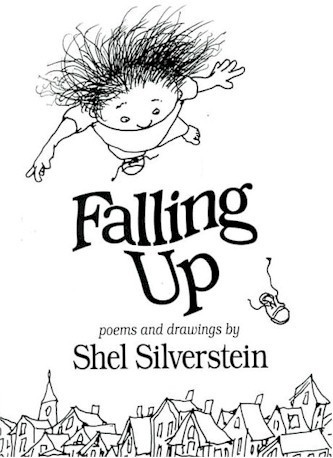
Falling Up


Falling Up was written and illustrated by one of my favorite poets (and the poet i selected for my A/P/I study) Shel Silverstein. This book was the first of Slverstein's three large books of poetry. There is a large selections of poems in this book - all of which are creative, hilarious and entertaining for both children and adults alike. There are poems about "Complainin' Jack", "Wastebasket Brother", "Morgan's Curse", "Danny O'Dare" and "Long-Leg Lou and Short-Leg Sue". The poems are very imaginative - I never know where Silverstein gets his ideas from!!

There are so many poems in this book, that I will touch on a few of my favorites. One of my favorite shorter Poems from Falling Up is called, "Woulda-Coulda-Shoulda". It reads:

All the Woulda- Coulda-Shouldas
Layin' in the sun,
Talkin' bout the things
They woulda-coulda-shoulda done...
But those Woulda-Coulda-Shouldas
All ran away and hid
From one little did.

This Poem is so simple. It takes a funny twist on a phrase, "woulda-coulda-shoulda" and makes it into a story that is funny and clever. The last line is my favorite - it's so creative! A little did is what scared the "Woulda-Coulda-Shouldas" and that shares an important message with readers - don't just think about doing something...just do it!

I also like the poem, "People Zoo". This poem cleverly switches the roles around and discusses how animals roam free and go visit people zoo's where all of the human-beings are locked up inside! Here is my favorite line,

Now I'm here in a cage that is small as can be
(You can't let while people just run around free),
And I'm fed bread and tea at a quarter to three,
And the animals all come and gander at me.

Silverstein's writing flows together so nicely and maintains a fluid rhythm that allows it to be read at a comfortable, enjoyable pace. Silverstein often takes well-known things or activities and switches them around to make the readers take a different perspective on things! No matter what, Silverstein's poetry and simple black and white line drawings to accompany each poem are a success. Kids love his books and adults do as well!

My Reflection Statement

Reading and Responding to Children's Literature has been a very interesting class so far. I really enjoy how we incorporate technology into the classroom. I had never made a blog prior to this class and have really enjoyed the process. Additionally, a blog will last forever. I can utilize this growing resource in my own classroom in the future. This blog will serve as a resource for books that I may choose to read to my students. I will remember which books I enjoyed and why and which books I would rather keep out of my classroom - I can look at my own book reviews to make my decisions. Additionally, some of my blog posts I have set up are organized by specific units I could use in my classroom - i.e. series books, controversial books, poetry, graphic novels, etc.

We also were given the opportunity to set up glogs, which I had never even heard of before. I loved making my glog - it was so much more interactive than writing a paper. The glog allowed me to show off my creative side - it reminded me of an art project - I was able to coordinate colors, choose backgrounds, select fonts and colors, select my layout, etc. I was also excited to choose my own poet/illustrator - Shel Silverstein. Silverstein has been one of my favorite poets since I was young. I own many of his books and love his poetry. The blogs are fun, but the glog was the most fun!

Sometimes it's strange that we only meet once a week - it seems like we go so long without meeting. But it's also nice because we always have books to read, blog posts and other assignments to do so we really need a week to get that work done. I like how this class is providing me with activities, materials, knowledge and technological resources to last me well into my career as a teacher. A lot of what we are doing is very valuable for my future profession.

Tuesday, March 23, 2010

Tuesday, March 9, 2010

The Misfits


The Misfits is written by James Howe. This book documents four friends during their 7th grade year - Bobby, Addie, Skeezie and Joe. These four friends all consider themselves "misfits" - they have been called every name in the book and form their pack based on their differences. Hoping to bring an end to name-calling in their middle school "the gang of five", as they refer to themselves, start a new third political party just in time for their school elections. There are the usual parties - the Democrats and the Republicans - and now there is the Freedom Party (later to be called "The No-Name Party"). These kids fight hard during their run for the win to make positive changes in their school. Meanwhile, all four kids face their fair share of difficulties in their life and we're particularly brought into the narrator's life - Bobby. Bobby has always been called names like, "Fatso", "Lardo" and "Fluff", etc. due to his weight. However, his weight gain was due to the death of his mother in elementary school. Bobby is awkward and shy, yet highly intellectual and well-spoken. The other members of "the gang of five" face taunts about their style, their height, their brains and their sexuality. At the end of the book, Bobby gives a terrific election speech for "The No-Name Party" and his school loves it. However, "The No-Name Party" ends up losing the election by a hair. But the school remains changed forever - valuing The No-Name Party's motives to end the vicious cycle of name-calling. And Bobby's crush, Kelsey, asks him to the school dance.

I never read this book as a middle-school-aged student myself, but I can see from reading it now it's importance and value in the classroom. This book would be interesting to read for students in middle school because of the format - there was a lot of conversation, play-like format which was easy and fun to read as the conversation bounced back and forth between the main characters. This book would also initiate a great conversation between the teacher and her students. It's important to discuss hurtful names in school because those names are tossed around all the time and do more damage than students dishing them out may know. I certainly remember all of the names I was called in Middle School - "Skinny Mini", "Lanky", "Prude", etc. And all of those names really stung and have stuck with me forever. I would like to talk about the pain name-calling can cause in my classroom and discuss why name-calling is not allowed in school or anywhere.

I do not find this book controversial in the slightest. Joe, the character who is gay, is fairly flamboyant but the boy who he has a crush on and ends up dating is the opposite, creating a realistic balance. Additionally the inappropriate names are appropriate because they're the reality of middle school. Name-calling happens all the time and the damage can sometimes be irreversible. This book effectively discusses these names and makes it clear why they are inappropriate.

I also think the book is very relatable - many students will be able to identify with one of the four main characters. I even related with Addie myself as an adult. This book was not as enjoyable for me to read as The Giver was, but I certainly can see why it would be a popular choice among middle school students and this book would be welcome in my classroom and a great read-aloud.

Tuesday, March 2, 2010

Mommy Laid An Egg OR Where Do Babies Come from?


This controversial picture book is again written and illustrated by Babette Cole. She has written many controversial children's books which go out of the box and out of many people's comfort zones. This book is about two children whose parents attempt to answer the age-old question - Where do babies come from? They answer their children with all sorts of silly made up ways - that babies are squeezed out of toothpaste tubes, carried to parents by dinosaurs, grown from a seed in a pot, found underneath rocks, etc.! But their children are too wise and already know where babies actually come from. So they draw some illustrations and help explain to their mom and dad where babies really come from. They draw the bodies, explain sperm and eggs, discuss positions of how babies can be made, talk about pregnancy and finally birth. These kids are too smart for their own good and make their parents blush due to their accurate knowledge.

This book is interesting. I am torn on how I feel about it. The subject of where babies come from and how they are made is a question all children ask and wonder about. Many parents fail to discuss this issue with their kids because it's an uncomfortable subject. This book was funny and was creative to have the kids explain to their parents through illustrations where babies come from, but there were aspects of the book that I found to be too controversial for a school setting. The page of positions was really unnecessary. The previous page had already shown how the man's penis can fit into the woman's vagina, but the positions were just too much. And they were all made to look so silly with children's toys involved (ie. a skateboard, balloons, etc.) that I found them to be inappropriate. Kids deserve to hear the facts and learn about sex so they're not confused and so they do not lead themselves to other false conclusions, but they also do not need to know sexual positions.

I'm not sure if I would read this book to my class. It's silly and fun so it could work to explain this to them, especially if they asked me because a book would be a terrific way to answer such a questions, but the positions really bothered me. Additionally, the picture at the beginning made the parents look like terrible parents. The kids were lying on a couch watching tv with junk food all around them. The house was a mess and there were animals everywhere. I did love the illustrations regardless - they're so fun and creative!

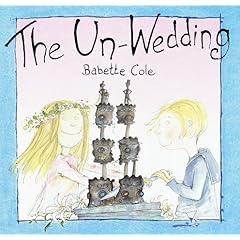
The Un-Wedding


This controversial children's book is written and illustrated by Babette Cole. This book is about two children - Demetrius and Paula Ogglebutt whose parents disagree on EVERYTHING. Their Dad and Mum hate living together, fight all the time, and never, ever get along. Demetrius and Paula are afraid that their parents bad marriage is all their fault. At school they hold a meeting to see if other children feel the same way about their own parents and they discover that most kids at school feel the same way. So, Demetrius and Paula go to their minister and ask if he can un-marry, or divorce, their parents. Their parents are thrilled by this and decide to un-marry each other at an un-wedding and it is a huge celebration with family and friends. Their parents are much happier, calmer people and they decide to live next door to one another with a huge underground tunnel connecting the two homes. Demetrius and Paula are so happy their their parents are happier - plus they get two of everything, which they can't complain about!

I really enjoyed this book. I think it is a terrific way to introduce divorce in the classroom. The story makes it clear that the children are unhappy when their parents are too, and it clearly shows how a divorce can actually bring happiness and peace to a family. The divorce rate is so high now that I know many of my students will come from divorced families. Many will likely have strong feelings about their parents divorce and many still may have step siblings and half siblings too. Even students whose parents are not divorced should read this book to better understand their friends and classmates situations. There were very funny parts of the story too, making the subject lighter and less controversial and sad.

I loved the illustrations! They were very cartoonish, but so fun and colorful with simple lines and strange details - they were very magical and had an element of fairy tale to them. I would recommend this book to every teacher and advise that it be read in the classroom - it would open doors of conversation.

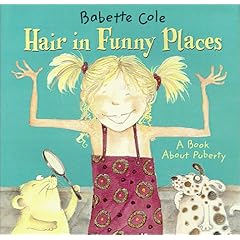
Hair in Funny Places - A Book About Puberty


This controversial children's book is written and illustrated by Babette Cole. This book is all about puberty and hormones. It begins with a little girl who is asking her wise teddy bear when she will finally become a grown-up. The teddy bear begins to tell her all about growing up using her mother and father as examples. The Teddy Bear tells her about Mr. and Mrs. Hormone and explains what they do when their inside a boy and girl's body. He describes body changes, hair growth, voice change, sexual feelings, acne, periods, ejaculation, etc. The story ends with the little girl being born from her mother and father and the bear worrying that when the little girl grows up that she will not want him anymore. But the little girl reassures the bear that she will always love him because he is so wise.

I thought this book did a good job with explaining puberty. However, puberty happens so much earlier in boys than it does in girls so it might be difficult to read to a classroom of children. The book suggests reading to children seven years old and older, but I almost feel that seven is a little young. Maybe discussing sex and puberty is what I feel may be controversial in a classroom. Part of me feels that it is parents jobs to explain this aspect of life to their children, but I also know that there are many parents who do not ever discuss such things with their kids. I think I would read this to my class in 5th grade if I were asked to teach sex ed. I do know that there would be some parents who would feel very uncomfortable with their young children being read to about puberty, private parts and sex. So, if I were to read books of this nature in my classroom, maybe I should write a note to parents asking them for their permission and if they were not okay, they could have the option to pull their child out?

I think this book very clearly describes the process with less than detailed pictures, but it is still controversial and I can see why. The illustrations are whimsical and fun and make the whole topic less uncomfortable. I think this book would make for a great read-aloud at home for parents and their children - it would get conversation flowing. Though, it still doesn't cover the topic of how babies are born...

and tango makes three


This controversial children's book is written by Justin Richardson and Peter Parnell and is illustrated by Henry Cole. This book is a true story that follows two male penguins - Silo and Roy. These two penguins, who live in the Central Park Zoo, found one another and fell in love becoming a couple. All of the other penguin couples were male and female. Only Roy and Silo were two males who were a couple. Saddened that they could not have a chick of their own like the other penguin couples, one of the zookeepers decides to give them an egg which had been born, but not cared for, by another female penguin. Roy and Silo know just what to do and they keep their egg safe and warm. One day, the egg hatches and a baby chick is born! Roy and Silo take care of their baby that is named Tango, because "it takes two to make a tango". This penguin family lives peacefully with the other penguins and still remain a family today.

This book would be a fantastic way to open up discussion about what it means to be gay and how that makes a family. This book would be great for young children (4 - 8 years old) because the main characters are penguins, not people, and sometimes it's easier to discuss such a controversial topic if the two involved in the relationship are not humans. Many children may grasp that if animals sometimes "marry" someone of the same sex, then maybe it isn't so weird for people to do the same thing. Many children may know someone close to them who is gay and they may find comfort being able to discuss this in their classroom. I want my classroom to be a safe learning environment and I hope students feel that way by not hiding their feelings and feeling capable of expressing their thoughts and opinions without being judged by their teacher or peers.

The illustrations in this book are great. They're colorful and detailed and keep the reader engaged. Your eye is drawn to the images and they really complete the story. The drawings are not entirely realistic but enough so that readers know which animals and situations they are viewing. I also liked the last page where more details regarding the true story are shared. This book is a simple story with great illustrations that would open up a conversation worth having in a classroom. I do not find this book controversial, but rather realistic.

Uncle What-Is-It is Coming To Visit!!


This controversial children's book was written and illustrated by Michael Willhoite. This book follows a brother and a sister - Igor and Tiffany, who find out that their Uncle Brett is coming to visit. Their mother informs them that he is gay and due to burning brussel sprouts she dashes out of the room before she can explain to the children what "gay" means. Igor and Tiffany have only met their Uncle Brett when they were babies, so they don't know who or what to expect. They go outside to find someone to explain what being "gay" means. They come across two teenagers who give them very judgemental, biased views of gay people. One boy says being gay means wishing to be a woman and dressing like one. The other boy explains that being gay means wearing leather and chains. Igor and Tiffany go to bed that evening, having nightmares of what their Uncle may act or look like. However, when Uncle Brett arrives the next morning, he looks entirely normal! Igor and Tiffany discover that being gay just means that men are attracted to other men, not women. They also learn to love their Uncle who likes to play catch, who can wiggle his ears, play piano and make yummy desserts. And, they learn that Uncle Brett HATES brussel sprouts, too!

This book is a great way to introduce the concept of gay to children. The book discusses various stereotypes that are placed on gay people and mentions that these can be true, but generally gay people are just like me and you. It's a wonderful message that would bring about positive conversations among students. Additionally, I'm sure many students will feel more accepted in the classroom if they feel that they may be gay or if they have parents, friends, family, etc, who are gay. This book will make their situation feel more normal and will explain honestly what being gay means to students who have no clue or mistaken assumptions.

Willhoite has written other controversial children's picture books. His most recognized (and most controversial) is Daddy's Roommate - a book about a boy with a gay father. Daddy's Roommate was featured in a New York Times editorial and was read aloud on Nightline. Many have tried to ban it across the country due to it's subject matter. Uncle What-Is-It is Coming to Visit!! is based on a similar issue - however, this book addressed transexuals, as well. I do not see this book as controversial due to homosexuality being largely prevalent in today's society and due to it's positive and informative message. I would certainly read this book to my students, eager for a conversation to follow.

Tuesday, February 23, 2010

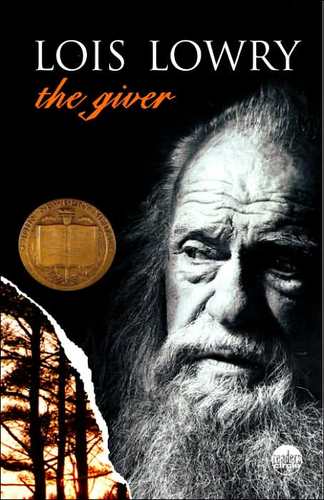
The Giver


The Giver is written by Lois Lowry. This book is about Jonas - a twelve-year-old boy who lives in a community of "sameness". Everything is safe in Jonas' life - it is all planned and in control. There is no war, no seasons, no pain and no choices when it comes to one's job, spouse, children, societal role, etc. At a ceremony, Jonas is given his "assignment", or his duty/job for which he is to fulfill for the rest of his life. While all of the other children in his twelve group are given normal jobs in the community, Jonas receives a special, rare job - he will be The Receiver. It is The Receiver's job to receive all of the memories/wisdom of years past. This job involves a lot of pain and The Receiver must be courageous and wise. The Giver, an older man who has been The Receiver for many years, trains young Jonas. Once Jonas begins his training, he realizes that this job is no ordinary job and that he has abilities that many lack. Once Jonas learns all about the past, before the period of "sameness" he feels too much and knows too much to connect to any of the identical members of his society. So The Giver convinces him to run away and leave the community to go to "Elsewhere" and leave all of the realistic, painful and sometimes beautiful memories from the past behind him in search for color, or life. He takes his baby "brother" whom his "father" nurtured, so that the baby can be spared, and he leaves, embarking on an excruciatingly difficult trek to "Elsewhere".

This book is fantastic. I read it when I was in Middle School and I believe that a lot of it went over my head - crucial details, messages and themes that made rereading it more enjoyable this time around. This book is powerful and deep - it creates vivid details in my mind and allows me to escape into another world or point in time. This book made me think and kept my mind working, keeping me hooked and wanting to turn each page as fast as I could to get to the next. I loved the many references to color - how the earlier portion of the book is colorless and neutral. Yet as the book continues, color begins to shine through, until the very end where there is color all around. The community Jonas was raised in is incredibly restrictive and depressing - yet interesting to find out about. It's fun to imagine a society so different, yet in some ways so similar, from our own. It makes the reader capable of removing themselves from normal life and placing themselves into the community. The book made me grateful for what I am free and capable of doing - I have choice. Yet it also reminded me of the restrictions still on my current life- some that seem necessary and others that seem restricting - driving ages, the ability to vote, the assumption of college, life stages from infancy to eighteen years of age, etc.

This book would be fantastic to read in 5th grade (at the way youngest) into early high school. I feel that far more would come out of this book if it were read in 8th or 9th grade versus 5th. However, I still believe that 5th graders and early Middle Schoolers would grasp certain important concepts and find themselves engaged in the book. It would be fun to work on the concept of color in this Utopian society with 5th grade students. I love art, so incorporating vivid images from the text with important themes covered would make for a fantastic, hands-on lesson. I would 100% use this book in my own classroom and will encourage my students to read it. Anyone of any age should read or reread The Giver if they have never read it before or barely remember it (as was the case with me). You will not regret it.

Thursday, February 18, 2010

Arthur's Birthday


Arthur's Birthday is written and illustrated by Marc Brown. This book is about Arthur's 8th Birthday. He is so excited for his birthday party and passes out all of his invitations at school to his friends. All of his friends feel conflicted, however, when they realize that Muffy's birthday party is on the very same day! Arthur and his friend Francine want to bring all of their friends together because all of the boys have agreed to go to Arthur's and all of the girls to Muffy's so they come up with a secret plan. They invite all of the girls to Arthur's house instead for a surprise party for Muffy and then convince Muffy to come over who is surprised to see all of her friends together. Both Arthur and Muffy are happy to celebrate their birthdays together with all of their friends in one place and agree to do it next year, as well.

I love the Arthur series. It is one of my favorites to read. I chose an Arthur book this week because it is one of my favorite series and because it is going to be my own birthday in a few days, so I guess reading it this week was sort of like a treat to me. The Arthur books are so great because they always have a simple, yet relatable plot and great, detailed pictures on each page. All of the characters are familiar to readers so it's enjoyable to read about their lives and adventures.

There is always a positive message to Arthur's books that is fairly easy to get across to readers. All of the characters are relatable to elementary-aged children, as well.

Arthur books will continue to be popular well into the future with kids of all ages - I mean, I watched Arthur into my middle school years.

One Hungry Cat


This children's book is written by Joanne Rocklin and is illustrated by Rowan Barnes-Murphy. The provided math activities are by Marilyn Burns and are a level 3 (grades 1 & 2). This book is about Tom, the cat. He starts out by making twelve cookies and invites two of his friends over to share the cookies. He wants there to be an equal amount of cookies for everyone, but eats some so there is an uneven amount. He decides to make a lemon cake instead and splits the cake up into equal pieces but eats too many pieces and halves of other pieces so they are now too small to serve to his friends. With his remaining ingredients, he bakes two blueberry muffins just for his friends because he is now too full.

This book is great because it really helps kids with numbers. There is also a parent note at the beginning for how to read the book and how to engage the child in questions/comments about math as they read along. This book can be made very interactive and really gets kids minds focused on mathematics

At the back of the book there are ways to retell the story differently and various puzzles/games to engage the reader in the story. These Hello Math books are designed to get parents to read to their children, to get children to read to their parents and to get parents and children to enjoy math together. Math is a subject that many children hate, as well as many adults (myself included!). This book tries to get kids to enjoy math and to realize that it isn't so scary, but maybe even a little fun.

I think this book would be helpful to children in a one-on-one basis where an adult is focusing all of their attention on the child and asking questions through out. If a child read this book alone, they may miss some of the mathematical facts.

Froggy Gets Dressed


Froggy Gets Dressed is one book of a series written by Jonathan London and illustrated by Frank Remkiewicz. This book is probably best for preschool aged children through to first or second grade. This book is about Froggy, a hibernating frog, who wakes up mid-winter ready to play in the snow. He dashes out after putting on his snow stuff but is repeatedly called back inside by his mother because he forgot to put something on. He runs back and forth taking everything off, putting everything back on again then back inside again. Lastly he forgets his underwear so his mom calls him back in but by that time, Froggy is too tired to play outside in the snow any longer so he gives up and goes back to sleep through the rest of the winter.

This book is great for young children because it teaches them how to get dressed and undressed. It also includes sound effects you read aloud as Froggy pulls various winter gear on and off (ie. zup! zat! zum!) This book contains a lot of repetition as Froggy's clothes come on and off, on and off.

This book has classicly engaging pictures, such as the ones in all of the froggy series. The pictures are colorful and detailed and are appealing to the eye. This book shows family relationships, despite the family being frogs rather than humans. Froggy Gets Dressed is fun and entertaining and sure to capture children's attentions.

Officer Buckle and Gloria


This book is written and illustrated by Peggy Rathmann. This story is about a police officer, Officer Buckle, and his police dog, Gloria (surprise, surprise). In this story Officer Buckle goes to various schools in Napville giving safety speeches as he has tons of safety tips he knows of. When the team gets Gloria he decides to bring along Gloria to sit next to him as he gives his speech. Unbeknownst to Officer Buckle, Gloria is acting out every safety tip he gives the children behind him! Suddenly, the children are no longer bored during his speeches but fascinated by it. Television crews come in to film Officer Buckle and Gloria and Officer Buckle cannot believe how well liked his speeches are. When he watches himself on TV that night, he realizes what Gloria is doing behind him and is embarrassed and angry. He sends Gloria to the schools alone but Gloria just sits on stage and stares at the floor sadly, eventually falling asleep - so do all of the students! After the students send letters begging Officer Buckle to return, he realizes that the most important safety rule of all is to stick with your buddy.

I remember reading this story in grade school and finding it hilarious. I loved how the silly dog would do goofy tricks behind the Officer without him knowing. The story is captivating enough and the pictures are detailed to keep us all engaged and interested in the story. This book is likely for middle to lower elementary grades due to it's simplicity - maybe up until 3rd grade.

This story contains a lot of details - each safety tip is readable on the slips of paper and you can look at the personalized notes from all of the students to Officer Buckle. This story is also relatable to all children as it is set primarily in a school. I also think most students remember sitting boredly in assemblies, wishing they were over. This story also shows how loyal and dedicated police officers are to their work and their commitment to keep everyone safe. There's a ton of great safety tips beneficial to the young students.

The Rainbow Fish


The Rainbow fish was written and illustrated by Marcus Pfister and translated by J. Alison James. This is a classic story loved by children and adults of all ages. This story is about the Rainbow fish - the loveliest fish in the sea. He has shiny, silver scales that all of the other fish admire. One day a little plain blue fish asks Rainbow fish for one of his beautiful scales and the Rainbow fish refuses and yells at the little blue fish. This little fish tells all of the other fish in the sea abut how mean and unwilling to share Rainbow fish is and soon enough, Rainbow fish found himself all alone. The Rainbow Fish gets advice from the wise octopus and decides to give a shiny, beautiful scale to each of his friends and other fish and they all are so happy. The Rainbow fish discovers that it is much more rewarding to be less beautiful but to have friends to enjoy life with than it is to be beautiful and alone.

Young children enjoy this book for its' simple story and are mesmerized by the shiny, foil stamping scales on the Rainbow fish. Older children seem to enjoy this book as well for similar, if not the same, reasons. I remember reading this book years ago and never forgot its' simple story or vibrantly beautiful pictures. This book is a classic and will remain that way due to Pfister's work. I also like the front and back end pages. The one in front has a picture of the rainbow fish with all of his shiny scales and the back end page has a picture in the same spot of the rainbow fish with only one scale and he's just as beautiful then.

This book would probably be great if it rhymed as well, but the way it is written now works just fine. I look forward to sharing this book with my young students.

Wednesday, February 17, 2010

The Baby-Sitters Club - Kristy's Great Idea


This graphic novel was recreated by the original writer of the series (Ann M. Martin) into this form by Raina Telgemeier. This book is about four friends - Kristy (the leader of the pack and the creator of the club), Mary Ann (the shy rule-follower), Claudia (the artsy rebel) and Stacey (the new girl). These girls form The Baby-Sitters Club and work together to take on babysitting jobs. However, a lot of issues are brought up in this book - friendships falling apart, accepting new people who are different, crushes on boys, divorced parents/new step-parents, and even Stacey's diabetes secret. This book would fall into the contemporary realistic fiction category due to it's ability to be real life today and it's focus on serious issues - diabetes and divorce. This book contains four very different main characters, which likely allows most girls reading this novel someone who they can relate to - either situationally or personally.

This book is great for maturing tweens. Girls in 5th grade would also enjoy this book, but this book would be appropriate through to middle school. This book touched on a lot of issues that middle school girls face - acting too "young", looking cool, developing crushes, following parents rules, getting in trouble at school and yes, babysitting. This book would be beneficial to young teens trying to overcome such challenges and issues that the girls face. The relatable characters would draw readers in.

The original series of these books were in novel format. This graphic novel format is really fun. It made for a quick read with tons of visuals to keep readers engaged. The drawings were simple, unrealistic and black and white, but they were still engaging, showed expression and keep one's attention on the story. This is a great recreation of a fantastic series, which has appealed to girls everywhere for years.

Monday, February 15, 2010

Alphab'art Find the Letters Hidden in the Paintings


This book is written and designed by Anne Guery and Oliver Dussutour. Each page displays the instruction for which letter to find on one page followed by the artist and name of the painting plus the year it was painted. The other side of the page has a full page size reprint of the original painting. The book goes through all 26 letters in the alphabet and it is fun to search for each letter. At the end of the book there are a few pages where the hidden letters are pointed out in a bright color. Some of them are hard to find so it's nice to have the answer page for reference. On the answer pages, there is also a description about the artist and the painting itself if one cares to get more information about the paintings.

This book is fantastic. Some young children may not be interested in art so this book gets kids engaged in the art and causes them to truly study each piece searching for the hidden letter. Then the information about the artist/piece really ties the whole book together giving kids an opportunity to get to know famous artwork. This book may be too difficult for very young children. I think it would be best for older elementary students - as young as third grade through to even high school or beyond. I loved looking for the letters and reading the information so maybe this book is interesting even through to adulthood!

This book would be great to read in an art class or in a regular classroom for a history lesson. It's creative, entertaining, interactive and tons of fun!

A Ghost Named Fred


This children's book is written by Nathaniel Benchley and illustrated by Ben Shecter. This story is about a little boy named George who goes into an old, empty house to get out of the rain. Inside this empty house is a ghost! And you guessed it - his name was Fred. Fred, however, is a very friendly ghost who has been searching for long lost treasure in the house. Both Geroge and Fred go on a search together to find this lost treasure and it is George who finally finds it as he opens up an umbrella to take with him outside - the treasure (gold coins) come spilling out! Fred is so happy and even lets George keep one gold coin as a gift.

This book is for younger children. The wording is very simple and the story is as well. Some of the illustrations are spooky but the majority of the book is not too scary as Fred ends up being a nice ghost. The pictures are simple and unrealistic but they're fun and creatively displayed - specifically with the use of color to show what is scary and what is not - some pages are almost entirely black to give us the knowledge that it is night time.

This book serves it's purpose, but is not overly exciting. I found myself pretty bored. I know I am an adult, but I still wasn't sure how well it would hold a classroom of kids attentions. If there had been more plot or more detailed pictures the story would likely have been better. There was not really a climax to the story, or not one that was strong enough. This book would still be good to read around Halloween, but I may have to keep kids quiet to pay attention!

The Berenstain Bears and The Spooky Old Tree


This book from the Berenstain Bears series is written and illustrated by Stan and Jan Berenstain. However, this book is not quite like the rest of the series because this book is part of the Bright and Early books for younger readers. The words are simpler, and the story slightly less complex. The Cat and the Hat presents this book about three young bears who go on a visit to a spooky old tree at night. While walking they encounter very spooky, scary things and places - a twisty old stair above crocodiles, a moving wall, a spooky old hall, and a great sleeping bear. After they all get the shivers from fear they sprint all the way home to their treehouse where Mama Bear is waiting for them and they are finally safe and sound.

The writing in this book is simple and easy to follow with a rhyming rhythm that is fun. The book also contain the classic Berenstain bear illustrations. I think it's a great idea to make a series more readable for beginner readers so that they too can join in on the magical Berenstain bear books that all kids know and love.

The Berenstain bears books are some of my favorites and I adored them when I was younger. These books contain just enough action and suspense and a fun enough plot to keep kids entertained. They almost all have a positive message that gets across to kids.

Sunday, February 14, 2010

The Greatest Game Ever Played


This sports book was written by Phil Bildner and illustrated by Zachary Pullen. In this story Sam and his "pop" spend most of their summers at the Yankee Stadium watching The Giants play baseball. But when the Giants leave New York for San Francisco, Sam and his dad decide to boycott Yankee Stadium altogether. However, Sam really misses his quality time with his dad so he convinces him to go to Yankee Stadium again to see the Giants football time, Sam's dad is is reluctant. But he agrees to go and bonds with his son once again at Yankee Stageman and they develop a mutual love for football.

This book is great for sports fans. It dealt with a lot of details of the game and had a lot of facts. The illustrations were great - very detailed and they looked very cartoonish at the same time. The writing was both factual and readable, though this book would likely be for older children due to the wording. Each page has a lot of writing, so it might be difficult for younger children to pay attention to it. Also, there are a lot of historical and sports related facts that do drag on - at least for someone like me who knows nothing about football! All the play-by-plays got boring for me, but a sports lover would likely enjoy them.

The pictures are great, the facts are beneficial to understanding the game and many people would enjoy this book - it just wouldn't be a favorite of mine!

Boris and Bella


This spooky tale is written by Carolyn Crimi and illustrated by Gris Grimly. This book documents the relationship between Boris Kleanitoff and Bella Legrossi - two neighbors who cannot stand one another. Bella is insanely dirty and does little to keep her house and yard in order while Boris is freakishly clean and keeps his house super clean. The two fight and fight yet when they both invite most of the same guests to their own parties - no one shows up! These two monsters decide to go to another party - the same one - and end up hitting it off and begin their monster romance.

This book is very creative and well-written. It was fun to read and I think kids would really like it! There's no kissing so most elementary-aged boys would handle the romance just fine. The story is clever and the illustrations are very quirky and unique - they provide a real somber, spooky effect to the book.

This book is engaging and most kids would likely get a kick out of it. I would certainly read this book to students or any children - especially around Halloween! It would be a great book to celebrate Halloween.